How UK Post-Brexit Trade Deals Are Reshaping Its Economy
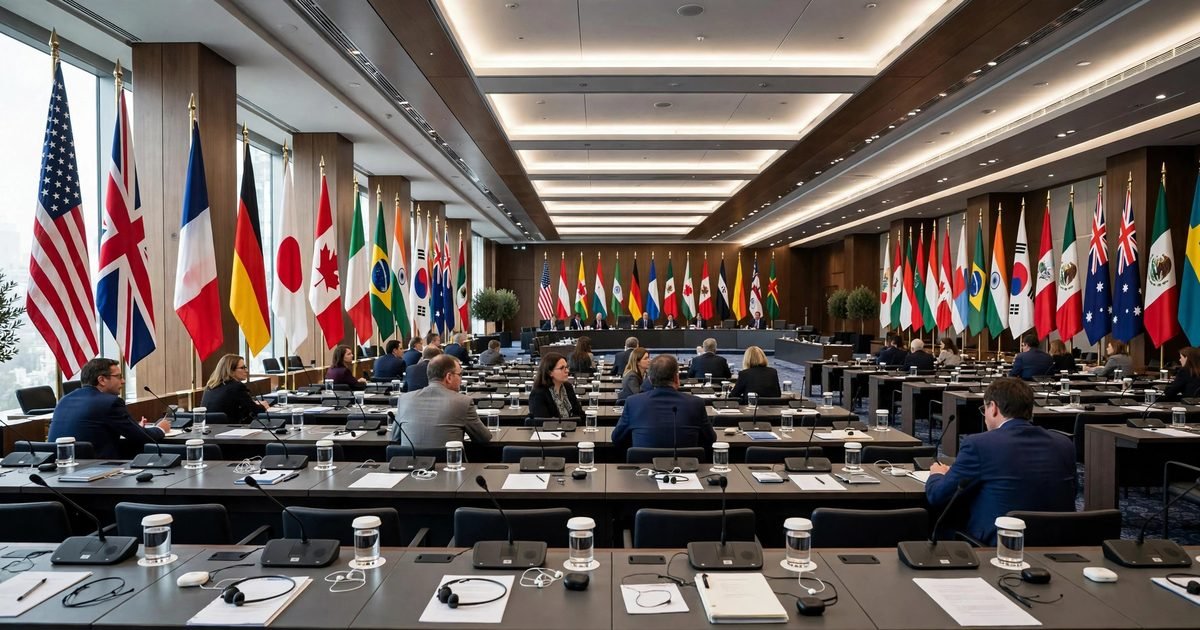
Leaving the European Union meant the United Kingdom had to rebuild its trade policy from scratch — negotiating its own deals after decades of Brussels handling them collectively. Years on, the record offers a first serious verdict on what independent trade policy has delivered.
The starting point was continuity: rolling over the EU agreements Britain had enjoyed as a member, to avoid cliff edges. The real test was new deals struck on Britain's own terms, pitched as the great prize of Brexit.
Deals signed and sectors affected
Britain has concluded agreements with economies across the Pacific, the Commonwealth, and beyond, alongside its foundational — and far more consequential — arrangements with the EU itself. For services, where Britain is strongest, the gains have been thinner: services trade depends on regulatory alignment and mobility provisions that goods-focused deals rarely deliver.
Agriculture and manufacturing face mixed effects: new market access in some directions, new frictions with the EU — still by far the largest trading partner — in the other. The net trade impact of any single distant deal is dwarfed by the changed terms with Europe.
The early economic verdict
Economists' assessments converge on a sobering pattern: the new deals add modestly to GDP over the long run, while the new barriers with the EU subtract more substantially. Trade intensity — trade as a share of the economy — has declined relative to peers, and business investment has been slower to recover.
Defenders argue the true payoff is regulatory autonomy and agility over decades, not deal-counting in the early years. Critics counter that autonomy unused, or used to diverge without clear benefit, is just friction by another name.
- Continuity deals prevented cliff edges; new deals are mostly modest in scale.
- Services — Britain's strength — gain least from goods-focused agreements.
- EU trade frictions outweigh distant-deal gains in most assessments.
The special arrangements for Northern Ireland remain the most delicate trade legacy: an open land border with the EU alongside checks on goods crossing the Irish Sea. Businesses have adapted, but the arrangements are politically contested and periodically renegotiated. How this unique trade regime settles will shape UK-EU relations for years.
Trade policy's long game
The deeper question is what Britain wants its trade policy for: growth, geopolitics, or regulatory sovereignty. Each implies different deals and different domestic choices. Until that strategy is clear, the deals will remain a patchwork — impressive in number, uncertain in purpose.
Related Stories
WorldHow International Students Reshape Universities and Cities
Tuition economics, campus culture, and housing impacts: the global student mobility story.
 World
WorldHow Cities — Not Nations — Are Leading on Climate Action
City-led climate networks are bypassing national gridlock with building codes, transit, and procurement power.
 World
WorldWhy Southeast Asia Is the New Manufacturing Frontier
Supply-chain shifts, industrial parks, and the workforce story behind the region's factory boom.