Undersea Cables: The Internet's Weakest Link
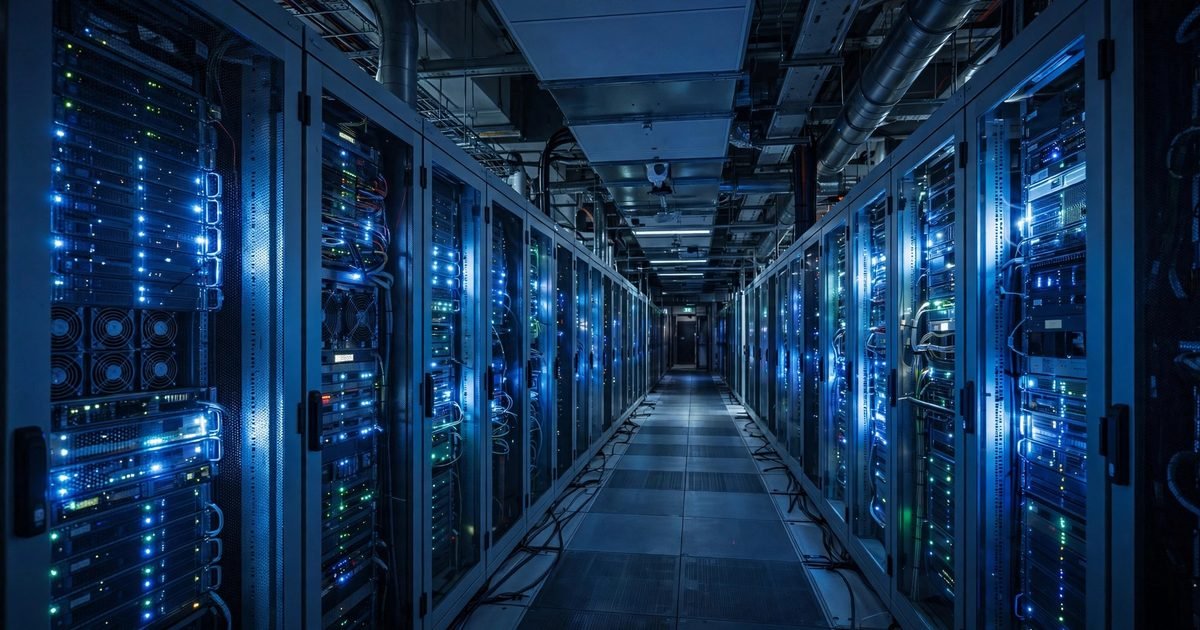
When you send a message across an ocean, it almost certainly travels not by satellite but through a fiber-optic cable lying on the seabed. These undersea cables carry the overwhelming majority of intercontinental internet traffic, along with trillions of dollars in daily financial transactions. They are among the most important — and least visible — infrastructure on the planet.
The network spans well over a million kilometers of cable, with new systems still being laid each year. Consortia of telecom companies and tech giants fund them, sharing capacity across routes that connect continents. A single modern cable can carry staggering amounts of data, and the busiest corridors — across the Atlantic, the Pacific, and through chokepoints like the Strait of Malacca — are economic lifelines.
How cables get laid and repaired
Laying a cable is a slow, specialized operation. Cable ships spool thousands of kilometers of fiber and lower it to the ocean floor, burying it in shallow waters where anchors and fishing trawlers pose risks. In the deep ocean, cables simply rest on the seabed, safe from most hazards but not all.
Damage happens regularly — often from ship anchors or fishing gear, sometimes from undersea earthquakes and landslides. Repair requires dispatching one of a small global fleet of cable ships, locating the fault, hauling the cable to the surface, and splicing in a replacement section. A repair that sounds simple can take weeks, during which traffic reroutes over backup paths.
Why sabotage is now a serious concern
In recent years, damaged cables near geopolitical flashpoints have raised alarms about deliberate sabotage. Unlike a cyberattack, cutting a cable is a physical act with immediate, visible consequences — and attribution is difficult in the vastness of the ocean. Governments have begun treating cable protection as a national security priority, increasing naval patrols near key routes.
The deeper worry is concentration: a handful of chokepoints carry a disproportionate share of global traffic. Redundancy helps — traffic can reroute — but simultaneous damage to multiple cables could degrade connectivity for entire regions. Resilience, engineers argue, means more cables on more diverse routes, not just thicker ones.
- Most intercontinental data travels by subsea fiber, not satellite.
- A small fleet of specialized ships handles all repairs worldwide.
- Geographic chokepoints are the system's real vulnerability.
Building a more resilient network
The industry response has been to build more: new transoceanic systems with diverse landing points, so no single cut isolates a country. Some nations are investing in domestically controlled cables for critical routes. International cooperation on cable protection is growing, though slowly.
For most internet users, undersea cables will remain invisible — until they break. Understanding this hidden layer is a reminder that the cloud has a very physical foundation, lying quietly on the ocean floor.
Related Stories
 Technology
Smartphone AI Features: What They Actually Do for You
Night modes, live translation, call screening: which smartphone AI features people actually use — and the gimmicks.
 Technology
How Ransomware Gangs Operate — and How to Stay Safe
From phishing to double extortion: how ransomware gangs operate — and the unglamorous defenses that actually work.
 Technology
Why Big Tech Is Racing to Build Custom AI Chips
Billions to escape chip dependence: the economics and strategy behind Big Tech's custom silicon race.