What the G20 Does — and Whether It Still Matters

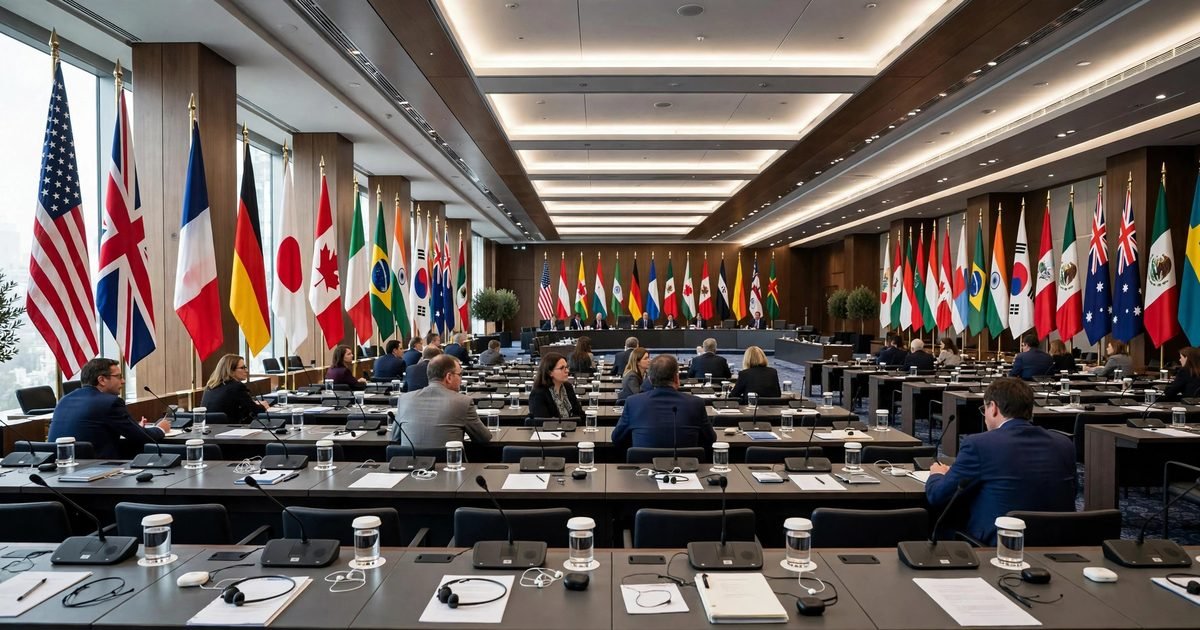
Once a year, the leaders of the world's largest economies gather for handshakes, family photos, and communiqués few people read. Critics dismiss the G20 as an expensive photo opportunity. Defenders call it the premier forum for global economic coordination. The truth, as usual, is more complicated.
Born as a finance-ministers' forum and elevated to leaders' level during the 2008 financial crisis, the G20 was designed for moments when the world economy needs collective action. Its record since is the evidence in the debate over its relevance.
What the forum actually delivers
At its best, the G20 coordinates crisis response: synchronized stimulus, debt relief frameworks, and financial regulation that no single country could impose alone. Its technical work — through finance tracks and working groups — grinds forward year-round on tax cooperation, anti-corruption standards, and development finance.
The leaders' summit itself is partly theater, but the theater has purpose: bilateral meetings on the sidelines often matter more than the plenary, and the communiqué process forces governments to articulate positions.
The case that it no longer matters
Critics make strong points. Communiqués have grown vaguer as geopolitical divisions deepen; on the hardest issues, the forum papers over disagreement rather than resolving it. Membership is arbitrary — why these twenty? — and the exclusion of smaller states undermines legitimacy. Implementation of past promises is rarely tracked rigorously.
When great-power rivalry dominates, the G20 risks becoming a venue for competing narratives rather than coordination.
- The G20 coordinates crisis economics; its technical tracks work year-round.
- Sidelined bilaterals often outweigh the formal summit.
- Deepening geopolitical divides are hollowing out consensus.
Below the leaders' summit, the G20's machinery grinds on through sherpa meetings and working groups covering everything from health to digital economy. This technocratic layer produces the standards, data-sharing agreements, and policy toolkits that outlast any single summit's headlines. Dismissing the forum as pure theater misses the quieter work that compounds year after year.
Engagement groups — business, labor, civil society, think tanks — feed recommendations into the process each year, giving the forum a broader base than the leaders' photo suggests. Their influence varies, but on technical issues like tax transparency and health preparedness, expert input has tangibly shaped outcomes. The G20 is, in this sense, a wider ecosystem than its critics allow.
Reform or irrelevance
The forum's defenders argue the alternative — no regular leaders-level economic coordination — is worse, and that the G20's value lies precisely in keeping rivals talking. Reform proposals include sharper agendas, better follow-through tracking, and stronger engagement with non-members.
Whether the G20 still matters may be the wrong question. The right one: what would replace it if it faded? Nothing currently on offer looks better.
Related Stories
 World
WorldHow International Students Reshape Universities and Cities
Tuition economics, campus culture, and housing impacts: the global student mobility story.
 World
WorldHow Cities — Not Nations — Are Leading on Climate Action
City-led climate networks are bypassing national gridlock with building codes, transit, and procurement power.
 World
WorldWhy Southeast Asia Is the New Manufacturing Frontier
Supply-chain shifts, industrial parks, and the workforce story behind the region's factory boom.