What 'Global South' Means and Why It Matters

It appears in summit declarations, trade negotiations, and news coverage of nearly every global crisis: the "Global South." The term is everywhere, yet its meaning is slippery. It is not quite geography, not quite economics — and understanding what it signals explains a great deal about modern diplomacy.
At its simplest, the Global South refers to the world's developing and emerging economies, mostly in Africa, Latin America, Asia, and Oceania. But the label is political as much as descriptive: it implies shared interests, shared grievances about the existing order, and a collective voice demanding a louder say in global decisions.
Where the term came from
The phrase gained currency as a replacement for "Third World," a Cold War-era label that carried condescending overtones. Activists and scholars preferred "Global South" as a term of solidarity rather than hierarchy. Over time, diplomats and institutions adopted it, and it now frames debates on climate finance, trade rules, and institutional reform.
Its vagueness is both strength and weakness. It unites countries as different as India and Bolivia under one banner — useful for coalition-building, misleading when their interests diverge, as they often do.
Who uses it — and who dislikes it
Emerging powers use the term to position themselves as leaders of a broader constituency, amplifying their diplomatic weight. International organizations use it as neutral shorthand. But critics argue it flattens enormous diversity: the challenges of a middle-income manufacturing hub and a low-income agrarian state have little in common.
Some analysts prefer more precise groupings — by income, region, or interest — arguing that "Global South" obscures more than it reveals. Others counter that in a system still dominated by wealthy nations, a unifying label has practical political value that precision cannot replace.
- The term replaced "Third World" as a label of solidarity, not hierarchy.
- It is political shorthand, not a precise economic category.
- Critics say it flattens deep differences between very different countries.
Why it shapes trade and diplomacy
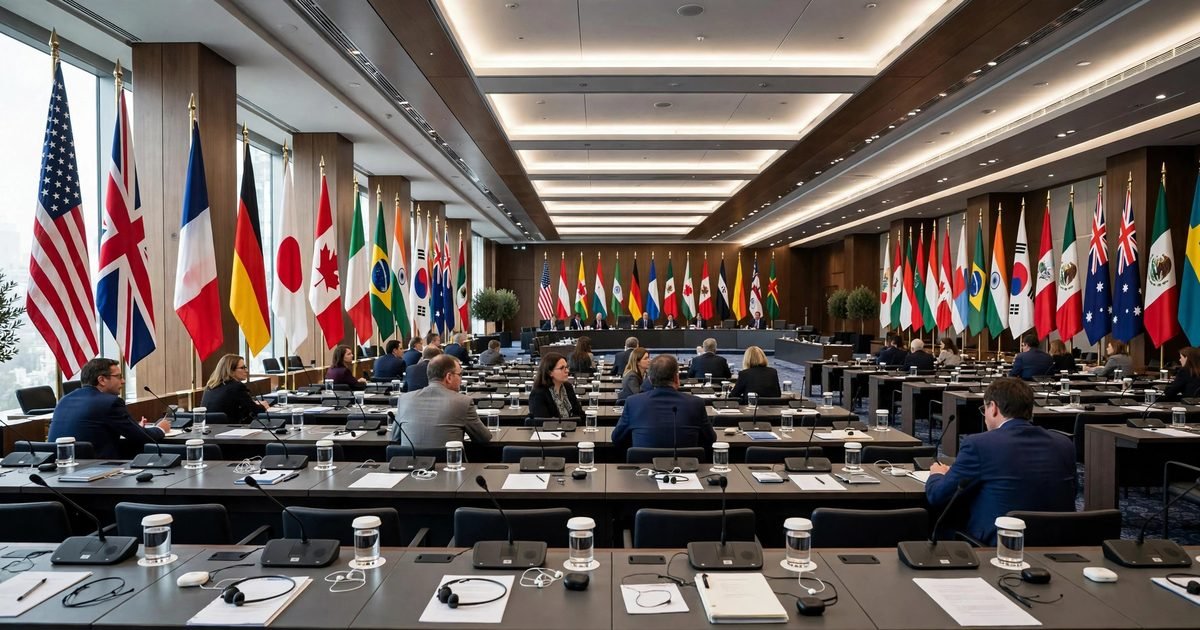
Whatever its flaws, the term now structures real negotiations. Climate talks hinge on Global South demands for finance and adaptation support. Trade debates invoke it when challenging rules seen as favoring rich economies. Reform of global institutions is framed as giving the Global South its due share of voice.
Love it or dislike it, "Global South" is the vocabulary of a power shift — a reminder that the world's economic and demographic center of gravity is moving, and the language of diplomacy is moving with it.
Related Stories
 World
WorldHow International Students Reshape Universities and Cities
Tuition economics, campus culture, and housing impacts: the global student mobility story.
WorldHow Cities — Not Nations — Are Leading on Climate Action
City-led climate networks are bypassing national gridlock with building codes, transit, and procurement power.
 World
WorldWhy Southeast Asia Is the New Manufacturing Frontier
Supply-chain shifts, industrial parks, and the workforce story behind the region's factory boom.