Why Altitude Training Works: The Science Explained
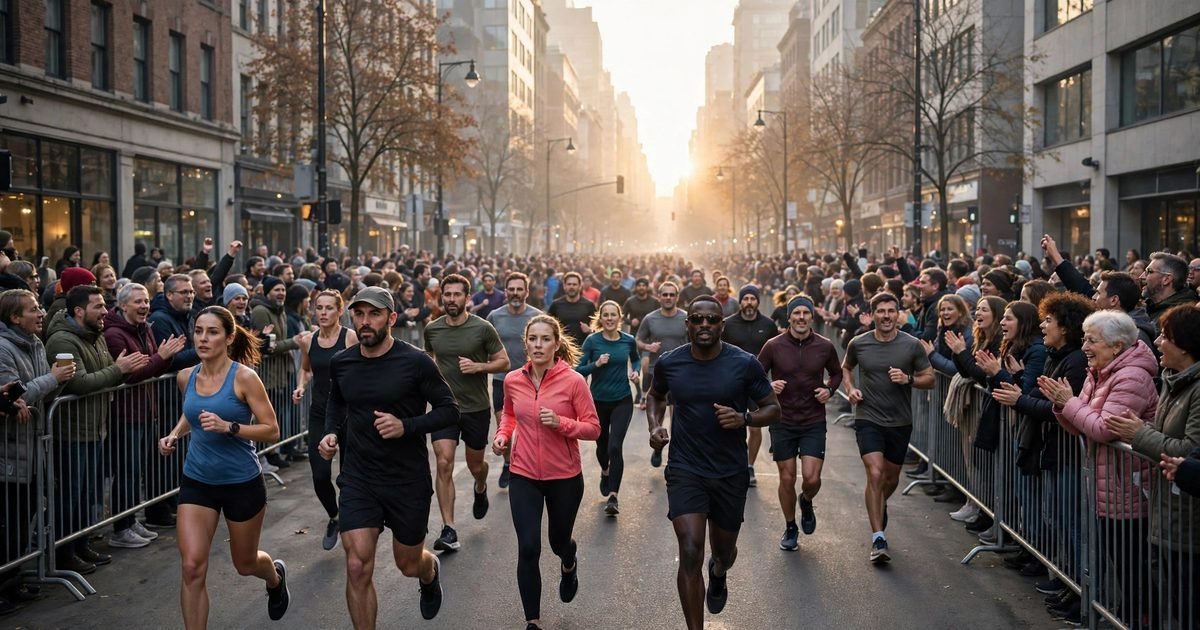
Every few years, before a major championship, photographs emerge of elite runners disappearing into mountain towns — Flagstaff, Iten, St. Moritz. They are not there for the scenery. At altitude, the air holds less oxygen, and the human body responds with one of the most powerful legal adaptations in sport: it builds more of the machinery that carries oxygen to working muscles.
The logic is simple, and it has shaped endurance training for more than half a century. Train where oxygen is scarce, and when you return to sea level, your blood can deliver more oxygen than before. Races are often won in that margin.
What thin air does to the blood
At sea level, each breath delivers a familiar amount of oxygen. Climb to 2,000 or 2,500 meters and the percentage of oxygen in the air is the same, but the lower pressure means each breath carries fewer oxygen molecules into the lungs. Blood oxygen saturation dips, and the kidneys notice. They release a hormone called erythropoietin — EPO — which signals the bone marrow to manufacture more red blood cells.
More red blood cells mean more hemoglobin, the protein that binds oxygen. Over two to four weeks at altitude, an athlete's oxygen-carrying capacity rises measurably. Back at sea level, muscles receive oxygen more generously at a given effort, so the same pace costs less. Physiologists describe this as an improved aerobic ceiling — the point at which the body can no longer keep up with oxygen demand shifts upward.
The effect is real but not magical. Gains are typically modest, measured in single-digit percentages, and they fade within weeks of returning to low altitude as red blood cell production normalizes. Altitude training is therefore timed carefully, usually ending shortly before competition so the benefit peaks on race day.
Tents, chambers and the rules
Not every athlete can spend a month in the mountains. That gap created an industry of simulated altitude: tents that fit over a bed, rooms with nitrogen-enriched air, and masks worn during exercise. The popular mantra is 'live high, train low' — sleep in thin air to trigger the blood adaptation, but train at sea level where workout intensity stays high, since thin air forces athletes to slow down.
Sports authorities have wrestled with where the line sits. Natural altitude camps are universally accepted. Simulated altitude devices are permitted by the World Anti-Doping Agency, which treats them as an extension of environmental training rather than a prohibited method. What is banned is the shortcut version of the same biology: injecting synthetic EPO or transfusing blood to raise red blood cell counts artificially. Those methods carry serious health risks, including thickened blood and cardiovascular strain, and they have produced some of sport's most notorious doping scandals.
- Natural altitude camps: legal everywhere, the traditional approach.
- Altitude tents and hypoxic rooms: permitted, mimicking the same stimulus.
- Synthetic EPO injections and blood transfusions: banned and dangerous.
The distinction regulators draw is between adapting to an environment and manipulating the body with drugs. Altitude training sits firmly on the accepted side — it is slow, uncomfortable, and honest. The athlete still has to do the work; the mountain merely changes what the work produces. That is why, decades after the first altitude camps, the world's best endurance athletes keep climbing.
Related Stories
 Sports
How Marathon Runners Fuel 42 Kilometers
Glycogen, gels and race-day science: the nutrition strategy behind the marathon.
SportsHow Cricket's T20 Format Conquered World Sport
Three hours, fireworks, franchises: the invention that remade cricket's economy.
SportsHow the NBA Became a Global Entertainment Product
Marketing, stars and international expansion: the making of basketball's empire.